Business Process Analysis: A Step-by-Step Approach

Business Process Analysis: A Step-by-Step Approach

what is business process analysis

Organizations constantly strive to improve efficiency and effectiveness. One way they are achieving this is through business process analysis. This emerging field combines data analysis and process improvement methodologies to provide valuable insights into organizational processes.

By collecting and analyzing data from various sources, such as customer interactions, employee productivity, and resource utilization, businesses can identify bottlenecks, inefficiencies, and areas for improvement. This article will explore the importance of business process analysis and how organizations can leverage this powerful tool to stay ahead in today's competitive market.  

FAQs

Business process analytics, also known as BPA, uses analytical tools and techniques to analyze and improve business processes. It involves analyzing data related to business operations and applying analysis techniques to identify areas for improvement. 

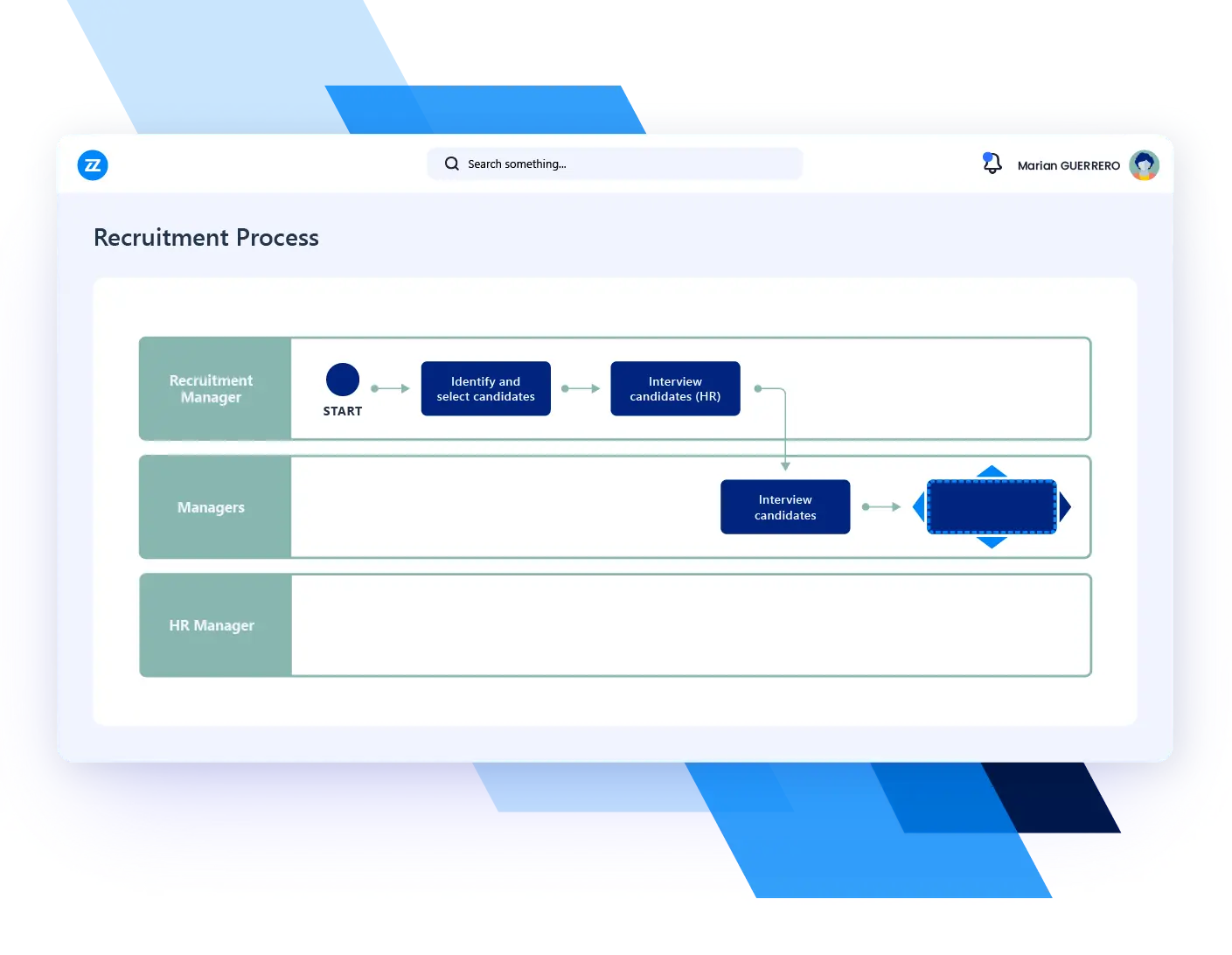
To conduct a business process analysis, you can start by mapping the current business process using flowcharts or process mapping techniques. Then, analyze the data collected to identify bottlenecks, inefficiencies, or areas for improvement. Finally, develop a plan to implement changes to optimize the process. 

A business analyst plays a key role in conducting business process analysis. They are responsible for gathering requirements, facilitating process improvement discussions, identifying pain points, and recommending solutions. Their expertise ensures the analysis is comprehensive and aligned with the organization's objectives. 

To apply business process analysis to a specific process in your organization, start by understanding the goals and objectives of the process. Then, document the current process flow and identify areas for improvement. Use business process analysis techniques to analyze the data and propose changes that will help optimize the process. 

Yes, business process analysis can be automated to a certain extent. Business process automation software can help collect, analyze, and visualize process data. These tools can simplify the analysis process and provide real-time insights, making identifying and addressing issues in business processes easier. 

Business process analysis provides valuable insights into the current state of a process. By identifying bottlenecks, inefficiencies, or areas for improvement, organizations can develop strategies to optimize the process. The data-driven analysis helps make informed decisions, implement changes, and monitor the impact to achieve better process outcomes and overall business improvement.


Why Business Process Compliance is critical to meet regulatory requirements 

Why Business Process Compliance is critical to meet regulatory requirements 

business process compliance is critical to meet regulatory requirements

Compliance is a vital aspect of any organization's operations. It refers to adherence to laws, regulations, standards, and guidelines that govern the organization. Compliance ensures that organizations operate ethically and responsibly, protecting their customers' and stakeholders' interests, while preserving their reputation to ensure business success. 

In our globalized and intricate environment, the growing amount of legislation and regulation makes it difficult for organizations to stay updated with compliance requirements and their impact on business processes. At the same time, an organization requires a robust internal control environment to ensure its processes are efficient and secure to support the pursuit of business objectives. 

FAQs

Business process compliance is critical to ensure compliance because it helps organizations maintain regulatory compliance, adhere to compliance standards, and ensure process compliance. Compliance may involve complex processes and various compliance regulations, which can be effectively managed through well-defined business processes. 

Business process management improves efficiency by streamlining workflows, identifying bottlenecks, and optimizing resource allocation. Organizations can achieve higher productivity, reduced costs, and improved customer satisfaction with well-designed and implemented business processes. 

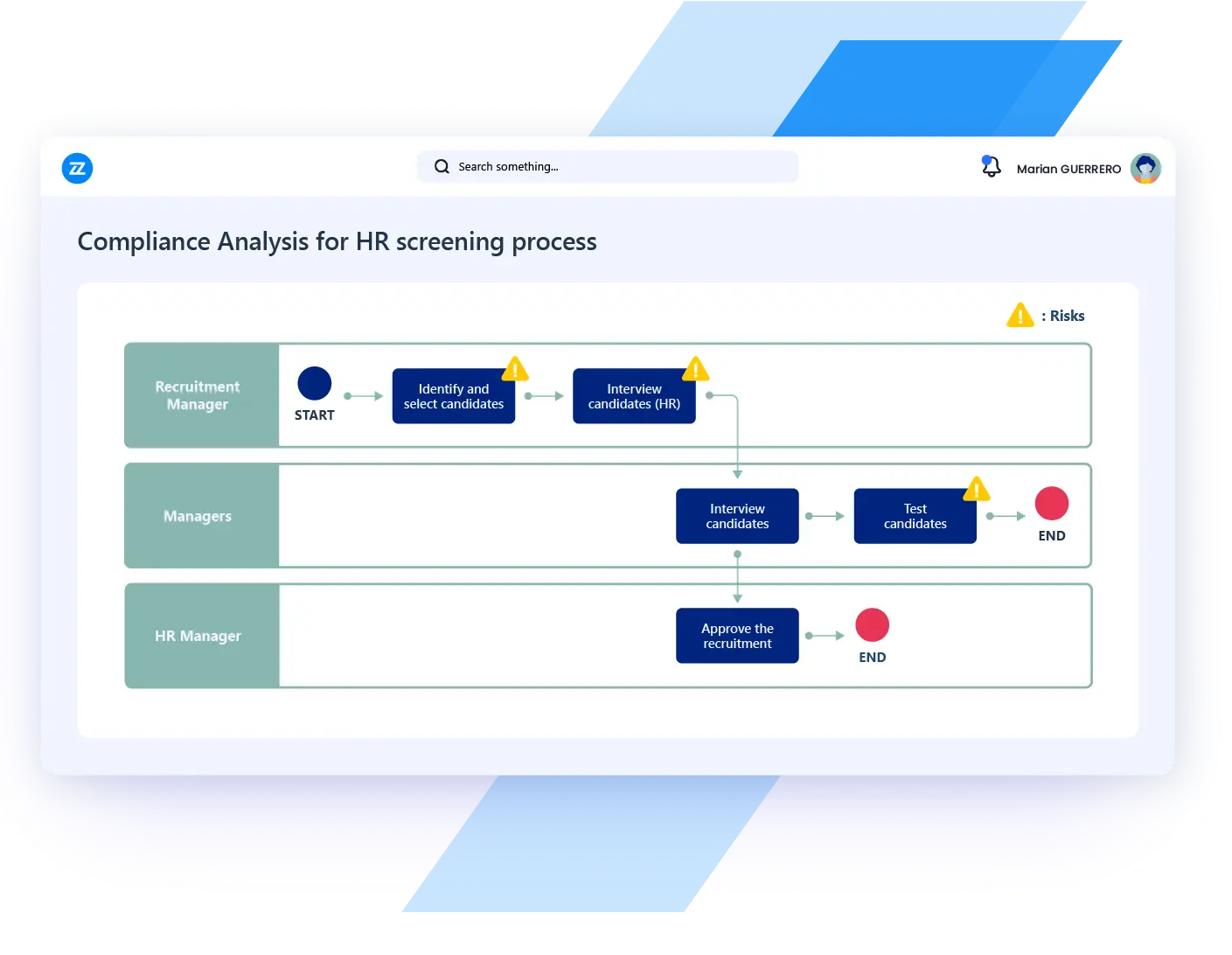
Compliance management ensures process compliance by establishing a management system that aligns with an organization's business goals and regulations. It involves implementing policies and procedures, conducting audits, and using compliance management software to monitor and enforce compliance. 

Compliance helps with risk management by identifying and implementing controls to mitigate potential compliance risks. By ensuring compliance with regulatory requirements, organizations can minimize legal and financial risks, maintain a positive reputation, and create a culture of integrity. 

Compliance management challenges include keeping up with evolving compliance laws, ensuring internal compliance across departments, managing complex processes, and integrating compliance into existing business workflows. However, these challenges can be overcome efficiently with the right tools and strategies. 

Business process compliance ensures transparency by establishing clear guidelines and standard operating procedures. With process compliance, organizations can monitor and track each process step, making identifying any non-compliance issues easier and maintaining internal and external transparency. 

Compliance is crucial in change management, ensuring that any new process or change implemented follows compliance regulations. Compliance helps organizations accelerate change management by minimizing risks associated with the changes and ensuring all stakeholders know the compliance requirements. 

Organizations can ensure process compliance by establishing a compliance management system, implementing compliance standards, conducting regular audits, training employees, using compliance management software, and continuously monitoring and improving processes. 

Compliance management software plays a significant role in ensuring business process compliance by automating compliance processes, centralizing compliance data, providing visibility into compliance status, and generating reports. It helps organizations efficiently manage compliance requirements and streamline compliance management efforts. 

Some best practices for ensuring effective compliance management include conducting regular risk assessments, documenting and updating policies and procedures, establishing a compliance culture, providing ongoing training and education, leveraging technology, and continuously monitoring and evaluating compliance performance. 


Ensuring Business Process Compliance: Best Practices for Success

Ensuring Business Process Compliance: Best Practices for Success

ensuring-business-process-compliance

Business process compliance is critical to running a successful and ethical company. It involves following regulations and industry standards to ensure all business processes comply.

Compliance with these requirements is essential for avoiding legal issues, maintaining stakeholder trust, and running an efficient organization. This article will explore the importance of business process compliance and how it can be achieved through automation and effective management.

Summary

Business process compliance is of utmost importance in today's regulatory environment. Businesses must understand and meet compliance requirements to avoid legal issues, maintain stakeholder trust, and improve business operations. Automation and effective management through change and compliance officers are vital in ensuring process compliance. Businesses can achieve and maintain compliance by prioritizing compliance and implementing the necessary tools and processes, which in turn improves their overall performance.

FAQs

Business process compliance refers to the adherence and implementation of rules, regulations, policies, and procedures within an organization to ensure that all business activities and processes align with legal requirements and industry standards.

Business process compliance ensures that all operations and activities are carried out standardized and consistently and by regulatory requirements and industry standards. By streamlining and automating processes, businesses can reduce errors, minimize risks, enhance decision-making, and improve operational efficiency.

Compliance professionals are responsible for developing, implementing, and monitoring compliance programs within an organization. They ensure that business processes align with regulatory requirements and industry standards and identify and mitigate any compliance risks or issues that may arise.

Automating process compliance can significantly benefit businesses by reducing manual errors, saving time and resources, enhancing data accuracy and consistency, and improving overall compliance management. Automation enables businesses to streamline compliance processes and ensures all activities are executed according to established rules and regulations.

Compliance audits play a crucial role in business process compliance as they assess the effectiveness of compliance programs and processes within an organization. These audits help identify gaps or non-compliance issues, enabling businesses to take corrective actions and ensure continuous improvement in their compliance efforts.

Compliance management software provides businesses with a centralized platform to manage and track compliance activities. It facilitates the implementation of compliance programs, automates compliance processes, stores compliance-related documentation, and enables real-time monitoring and reporting, thereby supporting effective process compliance management.

Ensuring proper compliance with business functions helps businesses maintain regulatory standards, minimize legal risks, protect their reputation, and build trust with stakeholders. It also promotes operational efficiency, facilitates smooth business operations, and creates a culture of compliance within the organization.

Compliance enforces standardization by establishing and enforcing consistent rules, policies, and procedures that all employees must adhere to. This standardization ensures that activities are carried out in a uniform and compliant manner, reducing variations and enhancing operational efficiency and effectiveness. 

Understanding compliance refers to comprehensive knowledge and awareness of regulatory requirements, industry standards, and internal business operations policies and procedures. It involves understanding the obligations and responsibilities of an organization to comply with relevant laws and regulations.

Process compliance management ensures that all business processes align with the organization's goals and objectives. By monitoring and enforcing compliance, businesses can ensure that activities are carried out to support the achievement of desired outcomes and strategic objectives. 


Crédit Agricole Cards & Payments Defines a New Products and Services Offering Using a Process Repository

Crédit Agricole Cards & Payments Defines a New Products and Services Offering Using a Process Repository

Challenges

  • Identify and better understand the business processes related to the new products and services offer

Results

  • Optimized processes to create a more customer-centric environment
  • A repository of business processes shared and used by stakeholders, especially in defining and upgrading the new offer

What challenges did you encounter that led to modeling CACP's processes?

Three factors acted as the catalyst for this. First, the compliance environment and new payment options considerably changed the circumstances of our core business. For example, creating the SEPA area (Single Euro Payments Area) aims to harmonize the means of payment in the Eurozone.

 
Customer Story Credit Agricole

Customer
Crédit Agricole Payment Services

Headquarter
Guyancourt, France

Country France
Industry Banking and Financial Services
Employees 501 - 1000

Product

Bizzdesign Hopex

Solution

Business Process Management

Tajco: Improve Visibility To Boost Efficiency While Continuing To Meet Quality Standards

Tajco: Improve Visibility To Boost Efficiency While Continuing To Meet Quality Standards

Challenges

  • Support the international growth strategy while standardizing processes across all countries.
  • Understand how processes affect operations
  • Comply with numerous quality standards, including ISO and IATF

Results

  • Mapping all business processes and procedures into a single repository
  • Better strategic alignment and performance measures
  • Broken-down silos and enhanced operational efficiency
  • Better process control with regular assessment
  • Easier demonstration of compliance with transparent and readily available information

Improve visibility across the organization and its processes to boost efficiency.

TAJCO is a global supplier of exhaust trims for the automotive industry. As such, it must comply with numerous quality standards like those issued by ISO and IATF – while continuing to implement its international growth strategy.

To tackle these challenges, they wanted a repository-based tool that would enable them to:

 
Customer Story Tajco

Headquarter
Ningbo, Zhejiang

Country China
Industry Automotive and Construction
Employees 501 - 1000

Product

Bizzdesign Hopex

Solution

Business Process Management

Naval Group Implements a High-Performance Quality Management System

Naval Group Implements a High-Performance Quality Management System

Challenges

  • Simplify and standardize processes
  • Facilitate access to process information
  • Secure involvement of people concerned
  • Reinforce efficiency of process management

Results

  • Business processes simplification
  • Enhanced operational efficiency
  • Better process control and execution

Implement a high-performance quality management system

Naval Group is Europe's leading provider of naval defense systems and services. The company generated €3.6 billion in revenue in 2018 and had 14,860 employees at year-end.

 
Naval Group logo on an image depicting two people working in front of computers.

Customer
Naval Group

Headquarter
Paris, France

Country France
Industry Aerospace and Defense
Employees 10,001+

Product

Bizzdesign Hopex

Solution

Business Process Management

Leading Asian Bank: Improve the Customer Experience

Leading Asian Bank: Improve the Customer Experience

Challenges

  • Define and share a consistent way to document the process
  • Implement process standardization
  • Improve process and customer experience

Results

  • Customer-centric model
  • Process maturity assessment
  • Information sharing tool

As one of the leading banks in Thailand, managing hundreds of products and services, customer experience, and process standardization are central pillars of the bank's strategy.

Before using Bizzdesign Hopex, this bank documented processes and workflows in various tools, including PowerPoint, Visio, Excel, and Word, and process data was kept in employee storage.

To improve processes and customer experience, they needed to establish the following:

 
Customer Story Leading Asian Bank
Country Thailand
Industry Banking and Financial Services
Employees 5001 - 10,000

Product

Bizzdesign Hopex

Solution

Business Process Management

Edison Energia - Increase Visibility and Collaboration Through an Efficient Process Mapping Program

Edison Energia - Increase Visibility and Collaboration Through an Efficient Process Mapping Program

Challenges

  • Management of organizational changes
  • Process mapping
  • Create a process-oriented culture
  • Design of an efficient, end-to-end customer experience

Results

  • Set up a shared information repository with internal stakeholders
  • Ability to incorporate organizational changes quickly
  • Support the business for the development of new projects


An interview with Cristina Macchi, Quality, Compliance & Processes Manager at EDISON ENERGIA

The Quality, Compliance & Processes function of the Gas&Power Market Division of Edison supports the business in defining, updating, and formalizing processes. Looking back over our long experience in process mapping, the three key pillars have been business needs and development, instruments, and people.

 
Customer Story Edison Energia

Customer
Edison Energia

Headquarter
Italy

Country Italy
Industry Energy and Environment
Employees 1001 - 5000

Product

Bizzdesign Hopex

Solution

Business Process Management

Risk and Business Process Management for Neobanks

Risk and Business Process Management for Neobanks

Challenges

  • Ensure compliance requirements
  • Restore reputation
  • Retrieve accessibility rights to certain markets

Results

  • Centralized shared repository of business processes
  • Efficient risks and compliance management
  • Improved digital resilience

From regulatory halt to business continuity: How a Neobank managed to overcome a regulatory setback

A major player in the fintech industry recently made the headlines by being urged by a local regulator to address its significant compliance and security flaws that led to severe breaches of anti-money laundering (AML) and terrorism financing laws.

 
Customer Story Neobanks
Industry Banking and Financial Services

Product

Bizzdesign Hopex

Solution

Business Process Management

Bizzdesign Announces New Leadership Team Following Merger With MEGA and Alfabet

Media Contact

For media, analyst, and speaking inquiries, please contact us.

press@bizzdesign.com

Bizzdesign Announces New Leadership Team Following Merger With MEGA and Alfabet

May 27, 2025

Utrecht, Netherlands, May 27, 2025

Bizzdesign, a leading enterprise transformation SaaS company, today announces its new Leadership Team for the combined organization following its merger with MEGA International and Alfabet. Operating under the unified name Bizzdesign, the company solidifies its position as a global leader in enterprise transformation.

About Bizzdesign

Bizzdesign is a global enterprise transformation SaaS company. Through the merger of three industry leaders, Bizzdesign, MEGA International, and Alfabet, the company offers a comprehensive enterprise transformation suite that helps organizations navigate the complexity of digital business. With a data-driven and AI-powered approach, it accelerates transformation, from vision to value, by empowering teams to collaboratively plan, design, and govern change.